
Wings Machinery
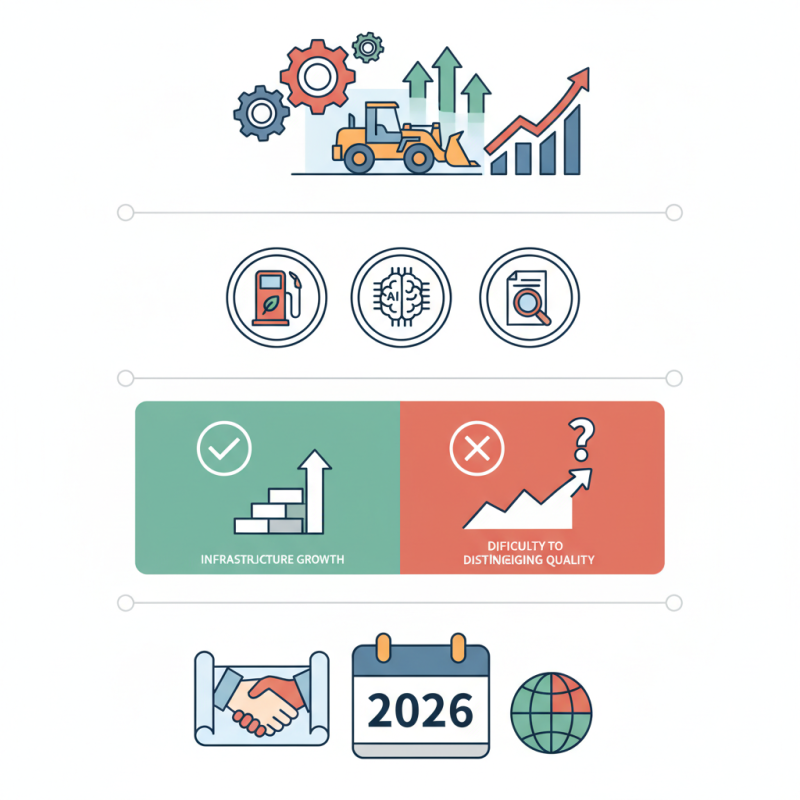
The 139th Canton Fair in 2026 presents a unique opportunity for businesses to explore the benefits of Wheel Loaders. As the construction and material handling industries grow, the demand for efficient equipment increases. Reports indicate that sales of Wheel Loaders are projected to rise by 5% annually, driven by infrastructure development and urbanization.
Advancements in technology have also influenced the Wheel Loader market. Features like enhanced fuel efficiency and innovative design are essential for modern operations. The integration of AI at the Canton Fair further streamlines procurement processes. Buyers can quickly locate suppliers with specific certifications, improving decision-making.
Despite the exciting prospects, it’s important to recognize potential challenges. Not all suppliers meet high standards, and distinguishing quality can be difficult. As you explore the exhibit halls, consider both the benefits and the pitfalls of investing in Wheel Loaders, ensuring that your choices align with your business needs.
In the ever-evolving construction landscape, wheel loaders stand out for their versatility. They excel in a multitude of applications, from earthmoving to material handling. According to a recent industry report, nearly 60% of construction companies rely on wheel loaders for heavy lifting tasks. This is not without reason.
These machines can transport large volumes of materials, significantly improving workflow efficiency. A typical wheel loader can move up to 3,000 pounds of aggregate in one scoop. Such capability allows projects to progress swiftly. However, due to their size and power, they require careful operation and maintenance. Operators must be adequately trained to avoid accidents and ensure optimal performance.
Moreover, wheel loaders are now more fuel-efficient than ever. Innovations have reduced their fuel consumption by nearly 15% in recent years. Despite this, not every model delivers the same efficiency. Buyers must assess their specific needs and consider equipment longevity. This impact goes beyond construction, affecting the bottom line and environmental sustainability. Thus, choosing the right wheel loader demands careful analysis and foresight.
The global wheel loader market is experiencing significant growth. According to industry reports, the demand for wheel loaders is increasing by approximately 5% annually. This growth is driven by construction, mining, and agriculture sectors. The rise in urbanization is also contributing to this trend. More cities mean more infrastructure work.
In 2025, the market is projected to reach a value of $15 billion. As infrastructure development gains momentum, wheel loaders are becoming essential. They excel in various tasks such as loading, lifting, and transporting materials. Their versatility makes them key players on construction sites. However, the trend raises concerns about sustainability.
Manufacturers face pressure to innovate. The push for eco-friendly machinery is growing. While advancements are being made, the transition is slow. Many companies struggle to balance performance with environmental impact. This challenge highlights the need for ongoing investment in research and development.
At the 139th Canton Fair in 2026, wheel loaders will shine with innovative technologies. These advancements aim to boost performance and efficiency. Enhanced engine designs lower fuel consumption. Electric models present a new era in sustainability. Their quiet operation can transform job sites, reducing noise pollution.
Ergonomics play a crucial role in modern designs. Operators can enjoy better visibility and comfort during long hours of operation. Advanced control systems enable precise movements. Yet, some operators may find these systems complex. Training may be required to maximize benefits. Innovations like quick-attach systems allow for rapid tool changes, making wheel loaders versatile.
However, not all advancements come without challenges. High-tech features can increase maintenance costs. Understanding these new technologies might take time for some users. The balance between cutting-edge performance and practicality raises questions for companies. Choosing the right wheel loader involves careful consideration of these factors.
| Feature | Description | Benefits |
|---|---|---|
| Advanced Hydraulic System | Utilizes variable flow control for better lifting performance | Increases efficiency and reduces fuel consumption |
| Electric Drive Options | Hybrid models available for reduced emissions | Eco-friendly operation with lower running costs |
| Intelligent Control System | Real-time monitoring and performance adjustments | Enhanced usability and increased productivity |
| Ergonomic Cabin Design | Designed for operator comfort and visibility | Reduces operator fatigue and increases safety |
| Enhanced Durability | Built with high-grade materials for long service life | Minimizes maintenance costs and downtime |
Wheel loaders play a critical role in various industries. Their efficiency in material handling significantly influences operational costs. Companies that utilize wheel loaders can reduce labor expenses and enhance productivity. For example, studies show that wheel loaders can improve material transport speed by up to 30%. This increase directly correlates with reduced operational expenditures.
In recent surveys, industry experts found that businesses using wheel loaders experience a 15-20% drop in fuel costs over time. This is due to advancements in technology and better fuel efficiency. However, some operators overlook regular maintenance, which can lead to increased breakdowns and unexpected costs. Neglecting these aspects can negate the financial advantages wheel loaders offer.
Alongside cost savings, wheel loaders enhance flexibility on job sites. They can easily switch attachments for different tasks, optimizing workflow. Yet, not all operators are trained to harness their full potential. Mismanagement can lead to inefficiencies, highlighting the need for proper operator education. Addressing this gap is crucial for maximizing the investment made in wheel loaders.
As the 139th Canton Fair approaches in 2026, the focus on sustainability in wheel loader manufacturing becomes increasingly important. These machines play a vital role in construction and agriculture. However, their environmental impact cannot be ignored. Manufacturers are now prioritizing eco-friendly practices to reduce emissions and energy consumption.
Innovative technologies are being developed to lower fuel use in wheel loaders. Electric and hybrid models are gaining traction, showing promising results. These alternatives not only decrease pollution but also reduce noise levels. Many companies are experimenting with biodegradable materials for components, which could lessen waste in landfills. The shift towards sustainability in this industry is evident, yet challenges remain.
While progress is being made, there are still gaps to address. For instance, the lifecycle impact of batteries in electric wheel loaders is under scrutiny. Recycling and disposal methods need improvement. Ensuring that all production stages are environmentally friendly remains a goal. Overall, the commitment to sustainable practices shows potential, but continuous effort and innovation are essential for real change.
: Wheel loaders improve material transport speed by up to 30%, reducing overall operational expenditures.
Companies may see a 15-20% reduction in fuel costs over time due to better fuel efficiency.
Overlooking maintenance leads to increased breakdowns and unexpected expenses, offsetting the financial benefits.
They can easily switch attachments to perform various tasks, optimizing workflow and productivity.
Not all operators are trained properly, which can result in inefficiencies and underutilization of the machinery.
Sustainability will be essential, with manufacturers prioritizing eco-friendly practices to reduce emissions and energy use.
Electric and hybrid models are being developed to decrease pollution and improve fuel efficiency.
These materials aim to lessen waste in landfills, aligning with sustainability goals in the industry.
The lifecycle impact of batteries needs improvement in terms of recycling and disposal methods.
While progress is evident, ongoing gaps exist that need continuous effort and innovation for true impact.
The 139th Canton Fair 2026 highlights the significant advantages of Wheel Loaders in various construction applications. These robust machines are gaining traction in the global market due to their versatility and the increasing demand for efficient heavy machinery. Technological innovations have enhanced the performance of Wheel Loaders, making them more reliable and user-friendly, which further drives their adoption in construction projects.
Moreover, Wheel Loaders contribute to cost efficiency by optimizing operational expenditures, allowing businesses to maximize productivity while minimizing expenses. The manufacturing processes of Wheel Loaders also focus on sustainable practices, reflecting a commitment to reducing the environmental impact. Overall, the combination of performance, cost-effectiveness, and sustainability makes Wheel Loaders a compelling choice for industry stakeholders at the upcoming Canton Fair.