
Wings Machinery
In the evolving logistics and material handling industry, the significance of Off Road Forklifts has surged. According to a report by MarketsandMarkets, the global off-road vehicles market is projected to reach USD 14.9 billion by 2026, driven by increased demand for advanced machinery. These specialized forklifts excel in challenging terrains, allowing businesses to improve efficiency in construction, agriculture, and outdoor materials handling.
Industry expert John Smith, a leading analyst at Forklift Dynamics, states, "Investing in Off Road Forklifts ensures your operations can thrive in diverse environments." His insights reflect the growing recognition of the flexibility these machines offer. They not only enhance productivity but also reduce the risk of equipment failure in rugged conditions.
However, it's crucial for businesses to acknowledge potential challenges with Off Road Forklifts. Selecting the right model is essential, as improper choice can lead to increased operational costs. Businesses must evaluate their specific needs carefully before making a purchase. Balancing innovation with practicality remains critical in an ever-competitive landscape.
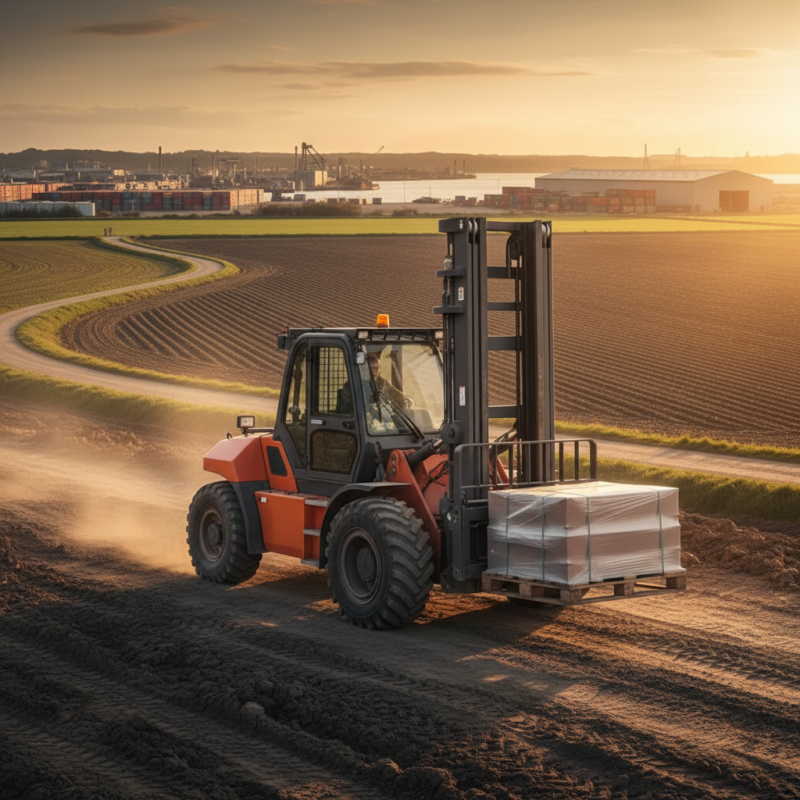
When selecting an off-road forklift, several key features stand out. First, look for superior ground clearance. A higher clearance ensures smooth operation on rough terrains. It allows the forklift to navigate over obstacles without getting stuck or damaged. This is crucial for outdoor operations.
Another important aspect is the drivetrain. An all-wheel drive system provides better traction on uneven surfaces. This feature helps prevent slippage and enhances stability. Also, consider the lift capacity and height. Choose a model that meets your operational requirements. Ensure it can handle the weight of your materials effectively.
Comfort is also essential. Ergonomic seats and user-friendly controls improve operator efficiency. Workers are more productive in a comfortable environment. However, even the best features can have drawbacks. Some operators may find complex controls challenging. Regular operator training can mitigate this issue, ensuring optimal usage over time.
When considering off-road forklifts, various brands rise to the occasion. These machines must be rugged, reliable, and capable of traversing uneven terrain. Experienced operators appreciate models that offer superior traction and stability. Reliability stems from solid engineering and extensive testing in various environments.
In global operations, off-road forklifts can substantially enhance efficiency. Users expect designs that simplify maintenance while maximizing uptime. While many brands claim to excel, the true performance often depends on real-world application. Many brands have established long-standing reputations, but not every model excels on every job site. Operators report that local support and parts availability can be critical factors in their decision-making.
The best brands typically adopt advanced technologies for improved functionality. However, some choices might present unique challenges or shortcomings. Evaluating options requires a careful balance of features and costs. Delving into customer reviews can reveal insights that specifications alone may not show. Each operator gains valuable experiences that can inform their recommendations, adding depth to the selection process.
| Model | Load Capacity (lbs) | Lift Height (ft) | Fuel Type | Terrain Capability |
|---|---|---|---|---|
| Model A | 6000 | 12 | Diesel | All-Terrain |
| Model B | 8000 | 10 | Electric | Rough Terrain |
| Model C | 7000 | 14 | Gasoline | Off-Road |
| Model D | 7500 | 15 | Diesel | Heavy-Duty |
| Model E | 9000 | 18 | LP Gas | Sand and Gravel |
| Model F | 6500 | 13 | Electric | Forest |
| Model G | 8500 | 16 | Diesel | Industrial |
| Model H | 7000 | 11 | Gasoline | Muddy Terrain |
| Model I | 8000 | 15 | LP Gas | Rocky Terrain |
| Model J | 9500 | 20 | Diesel | Extreme Terrain |
When examining off-road forklift models, a comparative analysis reveals distinct features that cater to diverse operational needs. Many models showcase specialized tires designed for rugged terrains. These tires provide enhanced traction and stability, crucial in uneven landscapes. The chassis design can vary significantly, affecting maneuverability and load capacity.
Some models are equipped with advanced suspension systems. This feature helps absorb shocks, reducing wear on machinery and improving the operator's experience. A few off-road forklifts offer hybrid powertrains, merging diesel efficiency with electric support for quieter operations. Yet, the initial cost of such hybrids remains a consideration for businesses evaluating long-term expenses.
Operators should reflect on their specific needs. Not all models excel in extreme conditions. Some may struggle in wet or muddy environments. Performance can also vary based on payload weight. The decision-making process requires careful thought to balance features with practical applications.
Off-road forklifts play a crucial role in various industries, especially those that involve rugged terrains. These machines excel in environments where standard forklifts struggle. They are designed for durability and traction, making them essential for construction, agriculture, and logistics. Their robust build allows operators to navigate uneven surfaces with ease. The benefits extend beyond mere mobility; they enhance operational efficiency in demanding circumstances.
One significant advantage of off-road forklifts is their ability to transport heavy loads across challenging landscapes. This capability reduces downtime and increases productivity. Additionally, these forklifts can be equipped with specialized attachments, offering versatility for different tasks. Many operators report improved safety and stability when using these machines in rough terrain. However, it is worth noting that improper handling can lead to accidents, emphasizing the need for training and safety protocols.
In industries where off-road conditions are common, investing in these forklifts can provide a competitive edge. They adapt well to changing environments and help streamline operations. While they are beneficial, careful planning is necessary to ensure they meet specific operational needs effectively. Understanding their limitations is also essential to maximize their performance and longevity in the field.
Maintaining off-road forklifts is essential for maximizing their performance and lifespan. Regular inspections can help identify potential issues early. A study from the Material Handling Industry Association states that proper maintenance can extend a forklift’s life by up to 50%. This translates to significant cost savings in the long run.
Daily checks should include tire conditions and fluid levels. Neglect can lead to costly breakdowns. Implementing a scheduled maintenance program is crucial. According to a report by the Occupational Safety and Health Administration (OSHA), poorly maintained forklifts are responsible for around 25% of workplace accidents. Regular servicing can mitigate these risks.
Using quality parts during repairs is vital for durability. For example, using appropriate tires for rugged terrain can enhance traction significantly. However, many companies rely on inexpensive alternatives, risking safety. Regular training for operators and mechanics ensures adherence to maintenance schedules. Nevertheless, it’s common for businesses to overlook these training aspects, which can hinder performance and increase repair costs.
: Superior ground clearance is essential for smooth operation on rough terrains. It helps avoid getting stuck.
An all-wheel drive system enhances traction on uneven surfaces. This feature prevents slippage and improves stability.
Choose a forklift that meets your operational needs. It should effectively handle the weight of your materials.
Ergonomic seats and user-friendly controls can boost operator efficiency. A comfortable environment leads to better productivity.
Regular inspections help spot issues early. Daily checks on tire conditions and fluid levels are crucial.
A structured program can prevent costly breakdowns. Poorly maintained forklifts cause many workplace accidents.
Always use quality parts for repairs. Inexpensive alternatives can compromise safety and durability.
Regular training ensures adherence to maintenance schedules. Neglecting training can lead to increased repair costs.
Many companies overlook training for operators and mechanics. This can hinder performance and lead to costly repairs.
Daily checks should include inspecting tire conditions and fluid levels. Neglecting these can result in breakdowns.
The article "Top 10 Off Road Forklifts to Boost Your Global Operations" highlights essential considerations for selecting off-road forklifts that enhance operational efficiency across various industries. Key features such as traction capabilities, lift capacity, and durability are examined to guide decision-making. The article includes a comparative analysis of different off-road forklift models, evaluating their performance and suitability for diverse applications in challenging terrains.
Moreover, the benefits of off-road forklifts are discussed, emphasizing their role in improving productivity and safety in off-road conditions. Maintenance tips are also provided to ensure the longevity of these vehicles, underscoring the importance of regular checks and proper servicing. Overall, investing in reliable off-road forklifts can significantly boost global operations by meeting the unique demands of rugged environments.
